
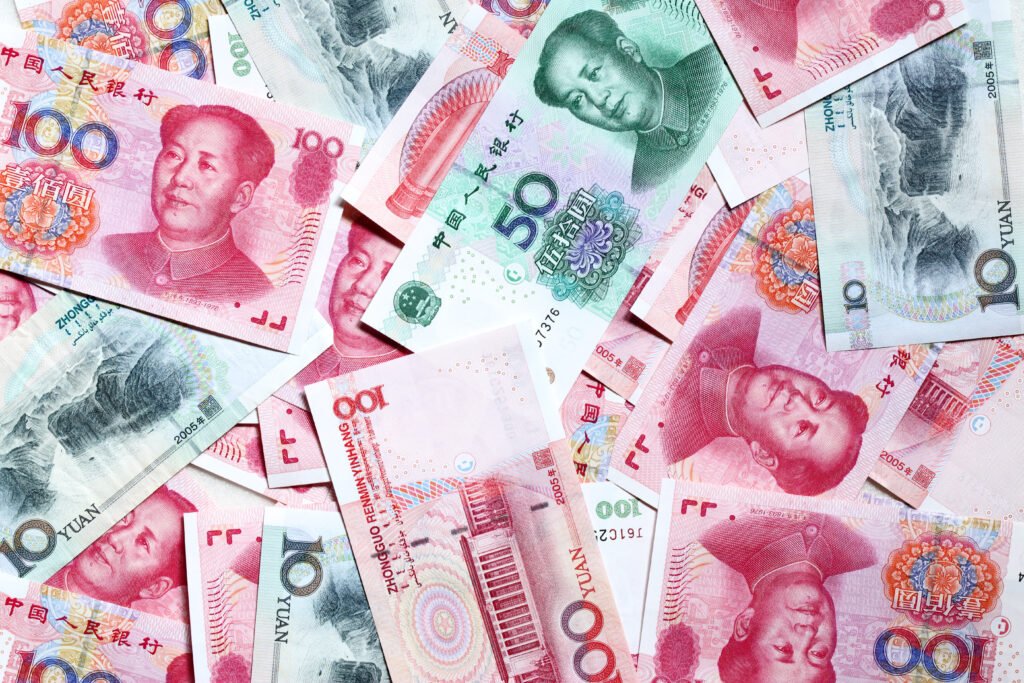
When a single digit separates panic from prosperity, you know markets have stopped thinking and started feeling. The People’s Bank of China set its central parity rate at 6.9929 against the U.S. dollar on January 23, 2026—the first time the fixing slipped below the sacred seven since May 2023. Financial media erupted. Analysts pontificated. Trading desks tensed. And somewhere in a corner office, a seasoned CFO probably muttered the only sensible response: “So what?”
That reaction isn’t cynicism. It’s wisdom forged in the furnace of currency markets, where psychological thresholds often carry more weight than economic substance. The #SevenYuanThreshold has become modern finance’s equivalent of breaking a mirror—an omen that triggers superstition rather than rational calculation. Yet beneath this numerical theater lies something far more consequential for business strategists: a recalibration of how the world’s second-largest economy positions itself in global commerce, how it balances export competitiveness against domestic consumption, and how it wields currency as both economic lever and diplomatic signal.
For executives steering multinational operations through increasingly choppy geopolitical waters, the yuan’s dance around seven matters less as a discrete event than as a symptom of deeper structural shifts. China’s $1.2 trillion trade surplus doesn’t exist in isolation from currency policy; the #PBOC’s tolerance for appreciation signals priorities that ripple through supply chains, pricing strategies, and competitive dynamics worldwide. When Beijing allows its currency to strengthen past a symbolically significant level, it’s not just moving decimal points—it’s declaring intentions, managing perceptions, and reshaping the architecture of international trade.
The hook here isn’t whether seven means anything mathematically. It doesn’t. The hook is why markets behave as if it does, and what that reveals about the intersection of economics, psychology, and power in an era where currency wars are fought through central bank fixings rather than battlefield trenches.
Decoding the Threshold: Why Seven Became the Number That Launched a Thousand Analyses
Numbers acquire meaning through repetition, crisis, and collective memory. The #YuanDollarExchangeRate of seven-to-one became financially significant not through any inherent economic property but through a decade of monetary drama that embedded it in trader consciousness as a boundary with consequences. Understanding this history transforms the current move from trivia into strategic intelligence.
For more than ten years following the mid-2000s, Chinese authorities maintained the yuan in a carefully managed range, predominantly between six and seven per dollar. This wasn’t coincidence. It reflected a deliberate policy framework where moderate appreciation satisfied international pressure for currency adjustment while avoiding the kind of sharp strengthening that would devastate export-dependent industries. Markets internalized this range as the operating envelope—the zone within which the #PBOC felt comfortable allowing market forces to play out.
The first critical moment arrived during the 2015-2016 capital flight episode. As China’s economy slowed and wealthy individuals sought to move assets offshore, downward pressure on the yuan intensified. The central bank intervened aggressively, burning through hundreds of billions in foreign exchange reserves specifically to prevent the currency from breaking through seven. This defensive action—expensive and publicly visible—signaled to every market participant that seven represented more than a number. It was a line Beijing had chosen to defend, which by definition made it a line worth watching.
Then came August 5, 2019—the day that etched seven into financial history with indelible ink. The context was escalating U.S.-China trade tensions, with tariffs piling higher and negotiations foundering. President Trump announced fresh levies on an additional $300 billion in Chinese imports. Beijing’s response wasn’t diplomatic protest or retaliatory tariffs alone. The #PBOC set its daily midpoint at 6.9225 and allowed market forces to push the onshore rate to 7.0391—a deliberate breach of the psychological barrier that markets had been trained to view as sacrosanct.
The reaction was immediate and severe. The Dow Jones Industrial Average plunged nearly 3% in a single session. The U.S. Treasury Department officially designated China a “currency manipulator,” a label carrying both legal and rhetorical weight. Financial commentators speculated about cascading devaluation toward 7.5 or beyond, potentially triggering a full-scale currency war. The breach of seven wasn’t treated as a routine market fluctuation—it was interpreted as geopolitical escalation conducted through monetary policy.
This 2019 episode transformed seven from an informal ceiling into a symbolic battleground. Every subsequent approach to this level—whether from strengthening or weakening—became freighted with meaning about China’s economic health, policy intentions, and relationship with the United States. When the yuan weakened past seven again in 2020 amid pandemic disruptions, in 2022 as growth slowed, and in 2023 during renewed economic headwinds, each crossing triggered similar analytical frenzy.
The historical pattern reveals something crucial for business strategists: the seven-yuan level functions as a #PsychologicalAnchor that shapes behavior independent of fundamental valuations. When the currency approaches this threshold from either direction, traders anticipate policy interventions, corporations adjust hedging strategies, and analysts recalibrate forecasts—not because crossing seven changes anything mechanical about trade economics, but because collective expectation of significance creates actual significance through reflexive behavioral loops.
Now, in early 2026, the yuan has strengthened past seven in the opposite direction—to approximately 6.99 per dollar. The #PBOC’s willingness to allow this appreciation, to let the fixing settle below seven and stay there, represents a subtle but meaningful policy signal. It suggests that Beijing’s current priorities differ from those that prevailed when defending seven consumed vast reserves, or when breaching seven served as trade-war retaliation. The question for business leaders isn’t whether seven has magical properties. It’s what the authorities’ changing relationship with this threshold reveals about broader strategic direction.
Strength, Weakness, and the Export Competitiveness Paradox
Currency movements create winners and losers with mechanical precision. A stronger yuan—requiring fewer yuan to purchase one dollar—delivers predictable economic effects that flow through corporate income statements like water finding its level. Yet the current situation contains a paradox that challenges conventional wisdom about what currency strength actually signals.
When the yuan strengthens, Chinese exports become more expensive in dollar terms. An American retailer purchasing widgets from Shenzhen suddenly faces higher costs in their base currency, even if the yuan price remains unchanged. For Chinese manufacturers competing globally on price, this represents a competitive headwind. Industries operating on thin margins—textiles, basic electronics, commodity goods—feel the pressure immediately. The stronger currency acts like a hidden tax on export competitiveness, squeezing profits unless companies can offset through productivity gains or product differentiation.
Conversely, a stronger yuan increases Chinese purchasing power for imports. American soybeans, German machinery, Brazilian iron ore—all become cheaper in yuan terms. For businesses selling into the Chinese market, currency appreciation can provide a competitive tailwind, making their offerings more affordable to Chinese buyers without requiring price cuts that erode margins. The same strengthening that hurts Chinese exporters helps foreign companies serving Chinese demand.
This creates the central paradox: China maintains the world’s largest #TradeSurplus at $1.2 trillion annually, yet allows its currency to strengthen. Traditional economic theory suggests persistent surpluses should naturally push currencies higher through demand for the exporting nation’s currency. Yet for years, China resisted this adjustment, intervening to prevent excessive appreciation that would undermine export industries. The current tolerance for strengthening past seven implies either that authorities believe the export sector can absorb the impact, or that other priorities have become more important.
Several factors explain this shift in calculus. China’s leadership has spent years emphasizing economic rebalancing—reducing dependence on exports and investment while elevating consumption and services. A stronger currency serves this objective by increasing household purchasing power and making imported consumer goods more affordable. It supports the transition from export-led growth to domestically-driven expansion, even at the cost of making manufacturers less competitive internationally.
The #PBOC’s measured approach—setting fixings slightly weaker than market expectations while allowing gradual appreciation—reveals sophisticated management. Capital Economics analysts noted that reference rates generally stayed weaker than spot trading levels, suggesting authorities are “trying to restrain the pace of appreciation to some extent.” This isn’t passive acceptance of market forces but active management through subtle guidance, allowing strengthening while preventing the kind of rapid appreciation that could trigger speculative capital inflows or export sector distress.
For corporate strategists, this creates a forecasting challenge. If currency policy serves primarily economic objectives—managing inflation, supporting rebalancing, attracting foreign investment—then models based on purchasing power parity, interest rate differentials, and current account positions might provide reasonable guidance. But if political considerations—trade negotiations, geopolitical signaling, domestic stability—override purely economic logic, then traditional fundamental analysis becomes insufficient.
The experience of 2019 demonstrates this vividly. Beijing allowed the yuan to weaken past seven not because economic fundamentals demanded it, but as calculated response to tariff escalation. The move served diplomatic and strategic purposes, using currency as a policy weapon in broader geopolitical conflict. Exporters benefited from improved competitiveness, but the primary objective was signaling resolve and retaliating against American trade measures without deploying tariffs that would harm Chinese consumers.
Companies with exposure to Chinese supply chains or markets must navigate this dual-track system where economics and politics intertwine unpredictably. A manufacturer sourcing components from China might model currency risk based on historical volatility and mean reversion, only to find that political developments—trade deal progress, leadership statements, policy pivots—generate movements that defy quantitative models. The yuan’s relationship with seven encapsulates this challenge: a technically arbitrary level that becomes genuinely consequential through collective belief and policy reinforcement.
The Capital Flow Dimension: When Currency Strength Signals More Than Trade
Exchange rates aren’t merely about making exports cheaper or imports costlier. They function as barometers of confidence, attractors of capital, and indicators of financial health that extend far beyond trade balances. The yuan’s strengthening past seven carries implications for international capital flows that matter enormously for portfolio managers, corporate treasurers, and anyone managing cross-border financial exposure.
Strong currencies attract capital; weak currencies repel it. This fundamental dynamic shapes everything from sovereign bond yields to real estate prices to stock market valuations. When investors perceive a currency as likely to appreciate, they seek assets denominated in that currency to capture both the underlying return and the currency gain. When depreciation seems probable, capital flees toward more stable alternatives, regardless of how attractive the underlying investments might be.
China’s currency management over the past decade has been substantially shaped by capital flow dynamics, particularly following the 2015-2016 episode when massive outflows threatened financial stability. Wealthy individuals and corporations sought to move assets offshore, anticipating currency depreciation and concerned about domestic economic prospects. The #PBOC intervened massively—depleting roughly $1 trillion in foreign exchange reserves—to stabilize the currency and stem outflows. The defense of the seven-yuan level during this period wasn’t just about export competitiveness; it was about preventing a confidence crisis where currency weakness and capital flight reinforced each other in a destructive spiral.
The current willingness to allow strengthening past seven sends a different message. It signals confidence that capital won’t flee even as the currency appreciates—indeed, that appreciation itself might attract inflows from investors seeking exposure to a strengthening yuan and potentially recovering Chinese asset markets. For a country with aspirations of transforming its currency into a genuine international reserve asset—held in central banks worldwide and used in cross-border transactions—demonstrating stability and controlled appreciation builds crucial credibility.
Yet the capital flow dimension creates distinctive challenges for corporate financial management. A multinational with significant earnings in China faces a decision: repatriate those profits immediately to the home currency, or leave them in yuan anticipating further appreciation? The conventional approach involves hedging to eliminate currency risk, but hedging carries costs that reduce returns. If appreciation seems likely and the company has confidence in Chinese market stability, holding yuan-denominated cash might deliver better outcomes.
The complication arrives when policy unpredictability enters the equation. Currency movements driven by market fundamentals—growth differentials, inflation rates, monetary policy divergence—follow patterns that financial professionals understand and can model. Movements driven by political considerations—trade negotiations, geopolitical signaling, domestic stability imperatives—introduce volatility that defies traditional analysis. The 2019 breach of seven demonstrated how quickly Beijing could shift currency policy in response to external pressure, moving from defending seven to deliberately breaching it within months as trade war dynamics evolved.
For treasury departments managing working capital across multiple jurisdictions, this uncertainty compounds the usual challenges of cash management. Should operational cash be concentrated in yuan or repatriated to dollars/euros? Should receivables be invoiced in yuan or converted immediately? Should payables be accelerated or delayed based on currency expectations? Each decision involves forecasting not just economic variables but political developments and policy responses that may shift with little warning.
The broader question involves China’s long-term currency ambitions. Beijing has clearly articulated goals of yuan internationalization—expanding its use in trade settlement, increasing its share of global reserves, potentially challenging dollar dominance in certain regions or sectors. Achieving these objectives requires building confidence that the yuan represents a stable store of value, that Beijing won’t manipulate it capriciously for short-term advantage, that capital controls won’t trap foreign investors.
Controlled appreciation serves these goals by demonstrating responsible management, allowing market forces greater influence, and providing returns that attract international capital. Yet the path remains fraught with contradictions. Capital controls necessary to prevent destabilizing outflows limit convertibility that genuine reserve currencies require. Policy interventions needed to manage domestic economic transitions undermine the market-driven credibility that international adoption demands. The yuan exists in a peculiar middle ground—more liberalized than during past decades, yet far from the free-floating regime that characterizes major reserve currencies.
The Diplomatic Currency: Signaling Through Exchange Rates
Exchange rates don’t just measure relative economic performance; they communicate intentions, signal priorities, and convey messages in the language of international finance that resonates far beyond forex trading desks. The #PBOC’s decision to allow the yuan to strengthen past seven in early 2026 carries diplomatic weight that must be understood alongside purely economic effects.
Context matters profoundly. The move occurs against a backdrop of ongoing tensions with the United States over trade imbalances, market access, technology transfer, and broader geopolitical competition. American officials have periodically accused China of currency manipulation—keeping the yuan artificially weak to subsidize exports and perpetuate trade deficits. While China officially abandoned such practices years ago, suspicions persist, particularly when the massive $1.2 trillion trade surplus seems inconsistent with a freely floating currency.
By allowing appreciation past the psychologically significant seven level, Beijing addresses these concerns through action rather than rhetoric. A stronger yuan makes Chinese exports more expensive in dollar terms, theoretically reducing the trade imbalance (though the relationship between exchange rates and trade balances proves far more complex than simple arithmetic suggests). More importantly, it demonstrates responsiveness to external pressure without appearing to capitulate—a face-saving formula crucial in diplomatic contexts where perception of strength matters enormously.
This dynamic transforms currency management from technical monetary policy into diplomatic tool. The daily fixing published by the #PBOC becomes a signal parsed not just by traders but by trade negotiators, foreign ministries, and corporate strategists trying to anticipate policy directions. A fixing that allows strengthening suggests Beijing prioritizes international goodwill, domestic consumption, or financial stability over export sector support. A fixing that resists market pressure toward appreciation suggests different priorities—maintaining competitiveness, managing growth concerns, or signaling resolve in trade negotiations.
The historical precedent of August 2019 demonstrates how dramatically this diplomatic dimension can reshape currency policy. When the yuan deliberately weakened past seven as tariffs escalated, the move represented more than economic adjustment. It was calculated response—retaliation without formal retaliation, signaling that China possessed tools to offset tariff impacts without deploying measures that would invite WTO challenges or harm domestic consumers. The currency became weapon and message simultaneously, deployed with sufficient ambiguity that plausible deniability remained intact even as markets interpreted the signal clearly.
For business leaders navigating this landscape, understanding the diplomatic layer becomes essential for scenario planning. If trade negotiations progress positively, currency appreciation might accelerate as Beijing removes defensive pressure and allows market forces greater influence. If tensions escalate—over Taiwan, technology restrictions, market access, or any of numerous friction points—currency could shift rapidly toward depreciation as occurred in 2019, regardless of what economic fundamentals might suggest.
The challenge lies in distinguishing signal from noise. Not every fixing adjustment carries geopolitical significance; many reflect routine technical considerations, seasonal patterns, or responses to immediate market liquidity conditions. Yet the #SevenYuanLevel has become so laden with symbolic meaning that movements around this threshold get interpreted through geopolitical lenses even when purely economic factors drive them.
Companies operating in this environment require frameworks that integrate multiple analytical dimensions. Economic fundamentals provide baseline expectations—where currency should trade absent political interference. Political developments offer scenario overlays—how relationships, negotiations, or conflicts might shift those baseline expectations. Market positioning reveals collective beliefs—whether traders are positioned for appreciation or depreciation, creating reflexive dynamics where positioning itself influences outcomes.
The ultimate insight is that currency no longer functions purely as a market-determined price clearing supply and demand for national monies. It operates as policy instrument, diplomatic signal, competitive weapon, and political symbol simultaneously. The yuan’s relationship with seven embodies this multidimensionality—economically arbitrary yet psychologically significant, technically managed yet subject to market forces, domestic tool with international ramifications.
Supply Chains in Motion: The Hidden Costs and Benefits
When currencies move, supply chains adjust with varying degrees of pain and opportunity. The yuan’s strengthening past seven creates ripple effects through the complex networks of procurement, manufacturing, distribution, and inventory management that constitute modern global business. Understanding these operational implications transforms exchange rate movements from abstract financial metrics into concrete bottom-line impacts.
Consider a basic scenario: an American electronics retailer sources components from Shenzhen manufacturers, assembles products in Mexico, and sells in the United States and Europe. Before yuan appreciation, the Chinese supplier quotes 100 yuan per unit. At 7.1 yuan per dollar, that converts to $14.08. As the yuan strengthens to 6.99 per dollar, the same 100-yuan quote becomes $14.31—a $0.23 increase representing 1.6% higher input costs.
For products with healthy margins, this might be absorbed without difficulty. For low-margin goods competing primarily on price, 1.6% can eliminate profitability entirely. The retailer faces unpleasant choices: accept lower margins, raise prices and risk losing market share, or find alternative suppliers in countries with more favorable currency dynamics (Vietnam, Bangladesh, Mexico).
This calculation repeats millions of times daily across global commerce, creating aggregate shifts in #SupplyChainGeography that accumulate over months and years. Sustained yuan appreciation makes China incrementally less attractive for price-sensitive manufacturing, potentially accelerating the diversification trend that trade tensions, pandemic disruptions, and rising Chinese labor costs had already initiated.
Yet the equation isn’t uniformly negative for businesses exposed to China. Companies selling into the Chinese market find their competitive position improving as the stronger yuan increases purchasing power. A German machinery maker quoting €100,000 for equipment previously required Chinese buyers to convert ¥800,000 (at 8 yuan per euro). As the yuan strengthens proportionally against both dollar and euro, the same equipment might cost only ¥760,000—a meaningful reduction that could tip purchasing decisions in favor of imports versus domestic alternatives.
The asymmetry creates winners and losers even within single corporations. A multinational with both sourcing and sales exposure to China might find effects partially offsetting—higher procurement costs balanced by improved market positioning for sales. Treasury departments must model these cross-currents, determining net currency exposure and whether hedging strategies should protect the gross exposure or only the net position after natural offsets.
Inventory management adds another layer of complexity. Companies holding yuan-denominated inventory see its dollar value increase as the currency appreciates—a translation gain that shows up in financial statements even though no operational change occurred. Conversely, accounts payable denominated in yuan become more expensive to settle. These balance sheet effects create tax implications, reported earnings volatility, and cash flow timing considerations that financial planning must incorporate.
The hidden impact involves behavioral responses by suppliers and customers. Chinese manufacturers facing margin pressure from currency appreciation may seek to renegotiate contracts, introduce surcharges, or reduce quality to maintain profitability. Buyers might preemptively switch suppliers before being forced to accept higher prices, creating disruption even before currency movements fully flow through to contract terms. The #ProcurementStrategy that worked when yuan traded at 7.3 requires recalibration when it trades at 6.99.
Forward-thinking supply chain organizations build currency flexibility into their network design. This means maintaining qualification of suppliers across multiple countries, structuring contracts with currency adjustment clauses, developing capabilities to shift volume between regions as exchange rates shift competitive dynamics. The companies that treat currency as someone else’s problem—something finance handles through hedging—discover too late that operational agility matters as much as financial instruments.
The broader transformation involves recognizing that currency volatility itself has become a permanent feature of global commerce rather than temporary perturbation around stable equilibrium. The decades following World War II, when Bretton Woods and subsequent managed exchange rate regimes provided relative currency stability, created business models built on predictable cross-border pricing. That era has definitively ended. Modern #GlobalSupplyChains must incorporate currency risk as a fundamental design parameter, not an afterthought addressed through treasury operations.
The Investment Angle: Reading Tea Leaves in Currency Markets
Portfolio managers and corporate strategists alike scrutinize currency movements for signals about investment climate, growth prospects, and policy direction. The yuan’s strengthening past seven provides data points that informed investors incorporate into broader analytical frameworks, though interpreting these signals requires distinguishing substance from symbolism.
A strengthening currency typically indicates capital inflows exceeding outflows—investors voting with their money that opportunities in that country justify currency exposure. When the yuan appreciated, it could reflect foreign direct investment into manufacturing facilities, portfolio investment into Chinese stocks and bonds, or simply traders positioning for further appreciation. Each driver carries different implications for economic health and sustainability.
The current situation presents mixed signals that complicate interpretation. China’s $1.2 trillion trade surplus creates organic demand for yuan as foreign buyers must convert to pay Chinese exporters. This represents genuine economic strength—China producing goods the world wants at competitive prices. Yet capital account dynamics tell a more nuanced story. Portfolio inflows have been volatile, responding to policy shifts, growth concerns, and risk appetite fluctuations. The question becomes whether yuan strength reflects robust fundamentals or temporary positioning.
For equity investors, currency movements create additional return layers beyond underlying business performance. A U.S. investor buying Chinese stocks gains or loses not just from share price changes but from yuan-dollar movements. When the yuan strengthens from 7.1 to 6.99 per dollar, the investor captures a 1.6% currency gain in addition to any equity returns. This can transform mediocre stock performance into acceptable total returns, or amplify gains when both equity and currency move favorably.
Yet currency gains can disappear as quickly as they appear. The investor who captures 5% equity return and 3% currency appreciation might watch those gains evaporate if the yuan subsequently weakens back to prior levels. Sophisticated investors hedge currency exposure when they want pure equity return without exchange rate risk, but hedging costs money and introduces tracking error versus unhedged returns.
Fixed-income investors face particularly acute currency considerations. Chinese government bonds offer yields higher than U.S. Treasuries or German Bunds, making them attractive from a carry perspective. But currency depreciation can eliminate yield advantage quickly. A bond yielding 3% in yuan delivers negative dollar returns if the yuan depreciates more than 3% annually. The current strengthening creates tailwinds for foreign bondholders, enhancing already-attractive yields with appreciation gains.
The #PBOC’s tolerance for appreciation past seven might signal confidence in stabilizing capital flows, suggesting authorities believe they can allow market forces greater influence without triggering destabilizing outflows. This policy comfort could make Chinese assets more attractive to international investors who previously worried about sudden policy shifts or capital control tightening that might trap investments.
Yet the historical record counsels caution. China’s currency management has demonstrated flexibility to reverse course when circumstances demand. The 2019 breach of seven in the weakening direction occurred within months of defending that level, demonstrating how rapidly policy can pivot in response to external pressures. Investors treating current appreciation as permanent trend risk discovering that political considerations can override market fundamentals with little warning.
Corporate treasurers managing cash across multiple jurisdictions face similar dilemmas. Should excess yuan-denominated cash be converted to dollars/euros immediately, or does appreciation potential justify holding yuan positions? The decision involves forecasting not just exchange rates but also assessing operational needs—whether yuan cash will be deployed in Chinese operations or eventually repatriated. A company with expanding Chinese operations might rationally hold yuan cash regardless of appreciation expectations, avoiding conversion costs and maintaining operational flexibility.
The sophistication lies in recognizing currency as one factor among many rather than the dominant consideration. An investment in Chinese technology companies shouldn’t hinge primarily on exchange rate forecasts; the underlying business fundamentals, competitive positioning, and growth prospects matter more. Currency provides enhancement or detraction but rarely makes a fundamentally bad investment good or vice versa. The yuan’s relationship with seven offers one data point in a mosaic of indicators that collectively inform investment judgment.
Beyond Seven: What Really Matters for Business Strategy
Strip away the psychological theater surrounding the #SevenYuanThreshold, and several fundamental realities emerge that carry genuine strategic weight for business leaders navigating China exposure.
First, China’s economic rebalancing continues, however unevenly. The transition from export-led, investment-heavy growth toward consumption and services represents a multi-decade project with profound implications. Currency appreciation serves this rebalancing by increasing household purchasing power, making imports more affordable, and gradually shifting resources toward sectors serving domestic demand. Companies whose China strategy remains anchored to the export-processing paradigm of previous decades risk misreading where opportunities actually lie.
Second, currency volatility has become a permanent feature of the global business environment. The relative stability of the Bretton Woods era and its immediate aftermath gave way to floating exchange rates, competitive devaluations, currency wars, and policy-driven interventions that make exchange rates unpredictable. Building organizational capabilities to manage this volatility—through financial hedging, operational flexibility, strategic positioning—separates companies that merely react from those that anticipate and adapt.
Third, the intersection of economics and geopolitics will intensify rather than diminish. Currency management, trade policy, technology restrictions, and broader strategic competition intertwine in ways that make purely economic analysis insufficient. The yuan’s trajectory depends not just on inflation differentials and current account balances but on U.S.-China relations, trade negotiation outcomes, and leadership decisions in both capitals. Business strategy must incorporate geopolitical scenario planning alongside traditional market analysis.
Fourth, #SupplyChainResilience requires geographic diversification even at the cost of efficiency. The concentration of manufacturing capacity in China created vulnerabilities that trade wars, pandemics, and geopolitical tensions have exposed. Currency volatility adds another argument for maintaining supplier options across multiple countries, building capabilities to shift production as relative costs change through exchange rate movements or other factors.
Fifth, the Chinese market opportunity continues growing despite skepticism about reported statistics or growth rates. A country of 1.4 billion people transitioning toward middle-income consumption patterns creates demand at a scale that justifies strategic investment even amid growth deceleration. Currency strength enhances this opportunity by increasing purchasing power, though competitive intensity remains fierce and regulatory uncertainty persists.
The strategic imperative involves moving beyond reactive currency management toward proactive positioning that anticipates shifts and builds advantage from volatility. Companies that treat the yuan’s movement past seven as merely a financial matter to be hedged miss the broader strategic signals about policy priorities, economic transition, and market evolution that currency movements reveal.