
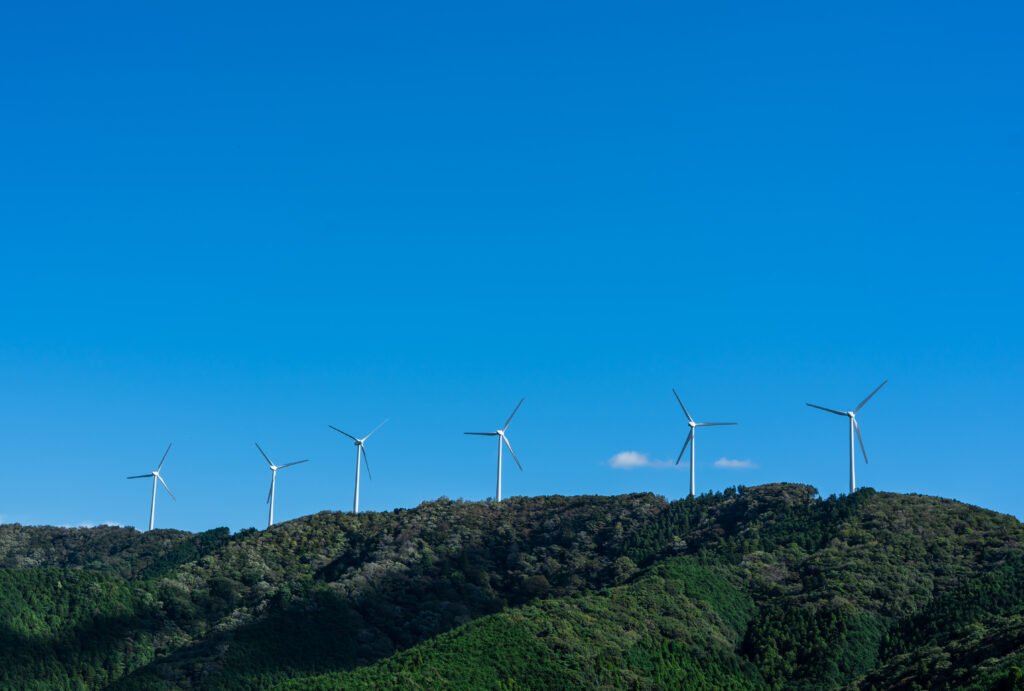
The bamboo bends but rarely breaks—an ancient principle that seems to have escaped Japan’s renewable energy strategists. While the rest of the world races toward wind and solar dominance, the Land of the Rising Sun finds itself navigating treacherous waters between #energysecurity ambitions and geological realities. What unfolds is not merely a tale of technological struggle, but a masterclass in how #policyinertia, institutional resistance, and natural constraints can transform ambitious targets into cautionary lessons for #renewableenergy deployment worldwide.
Between Fukushima’s shadow in 2011 and today’s modest 253.4 MW offshore wind capacity, lies a chasm filled with missed opportunities, regulatory quicksand, and a utility sector that treats renewables like unwelcome dinner guests. The numbers speak volumes: Japan’s offshore wind infrastructure represents barely four percent of installed wind capacity, while solar installations—despite initial post-disaster enthusiasm—struggle against grid constraints and policy reversals that have turned Feed-in Tariff success into a cautionary tale about #subsidymanagement gone awry.
This examination draws from operational realities and policy frameworks that reveal how #infrastructure ambitions collide with market mechanics, geographical determinism, and institutional memory. Understanding Japan’s renewable journey requires dissecting not just the technical barriers, but the deeper organizational DNA that prioritizes stability over disruption—a characteristic that serves earthquake preparedness admirably but strangles #energytransition momentum.
The Perfect Storm: Geography as Destiny
Japan’s archipelago presents #offshorewind developers with a devil’s bargain. The same tectonic restlessness that makes the nation a laboratory for seismic engineering transforms wind turbine deployment into an exercise in extreme engineering. Designing structures that withstand magnitude 7+ earthquakes while enduring typhoon winds exceeding 250 kilometers per hour elevates costs far beyond European or American benchmarks. This geological lottery didn’t merely add expense—it fundamentally reshaped the #economicfeasibility equation.
The seabed topography compounds these challenges magnificently. Unlike the shallow North Sea waters where bottom-fixed turbines flourish economically, Japan’s coastal waters plunge to depths that render conventional foundations impractical within kilometers of shore. This bathymetric reality explains the nation’s fixation on #floatingoffshorewind technology—a sector where Japan possesses genuine innovation credentials through demonstration projects like the 2 MW Sakiyama and 3 MW Hibiki installations, yet struggles to commercialize at scale.
These natural constraints interact perniciously with #supplychainmaturity. Without domestic manufacturers producing large-capacity turbines comparable to European standards, Japan imports both equipment and expertise, bleeding project economics while building dependency rather than industrial capacity. The absence of a Vestas, Siemens Gamesa, or GE equivalent domestically means every megawatt installed represents foregone #economicmultiplier effects that could have strengthened industrial ecosystems.
Mountain ranges covering roughly seventy-three percent of Japan’s landmass create additional complications for solar deployment. The scarcity of flat, accessible land drives #solarpower developers toward marginal sites—hillsides requiring extensive clearing, agricultural zones triggering food security debates, or brownfield locations demanding expensive remediation. Each installation becomes a negotiation with geography, community sentiment, and environmental regulation that extends timelines and erodes #projectviability.
Natural disaster resilience requirements further inflate costs across both technologies. Solar installations must withstand not just typhoons but heavy snowfall in northern regions, while offshore platforms require tsunami-resistant designs—specifications that European or American projects rarely encounter. This hazard profile transforms what might be routine #riskmanagement elsewhere into fundamental design constraints that separate economically marginal projects from financially unviable ones.
Regulatory Quicksand and Permitting Paralysis
The journey from concept to commercial operation for #offshorewindprojects in Japan resembles navigating a bureaucratic labyrinth designed by Kafka. Environmental impact assessments stretch across multiple years, involving coordination between prefectural governments, fishing cooperatives, navigation authorities, and environmental agencies—each wielding effective veto power. Projects announced with fanfare in 2012 or 2013 remained mired in approvals through 2020, watching costs escalate and financial models deteriorate.
Fishing rights negotiations deserve particular attention as #stakeholdermanagement masterclasses. Japan’s coastal fishing cooperatives hold statutory powers over offshore areas, transforming every wind farm into a complex bargaining process involving compensation structures, exclusion zones, and ongoing revenue sharing. Unlike terrestrial developments where land ownership provides clearer pathways, offshore installations must satisfy communities whose livelihoods depend on marine resources—a dynamic that grants extraordinary influence to organizations understandably cautious about industrial encroachment.
Grid connection processes compound permitting delays through technical requirements that reflect utility risk aversion rather than engineering necessity. The demand for detailed stability analyses, fault ride-through capabilities, and frequency regulation specifications—while technically justified—becomes weaponized through implementation requiring exhaustive documentation and iterative approvals. Projects capable of meeting technical standards find themselves trapped in administrative loops where #gridintegration becomes less about electrons and more about institutional gatekeeping.
Post-Fukushima Feed-in Tariff reforms introduced in 2012 initially accelerated #solardeployment through generous pricing that made projects financially attractive despite Japan’s cost structure. Solar capacity surged from roughly 5 GW in 2012 to over 60 GW by 2020, a growth trajectory that appeared to validate renewable optimism. However, this rapid expansion triggered second-order effects that revealed deeper systemic vulnerabilities within Japan’s #electricitymarket architecture.
FiT-driven growth occurred without corresponding grid modernization or storage infrastructure, creating what industry observers might euphemistically call a “success disaster.” Regions like Kyushu experienced #gridcongestion so severe that utilities began curtailing renewable output—paying solar operators to shut down rather than integrating their production. This perverse outcome—environmentally beneficial generation suppressed to maintain system stability—reflected fundamental misalignment between policy incentives and infrastructure reality.
Government responses to over-subsidization demonstrated reactive rather than strategic policymaking. Tariff reductions came swiftly and substantially, with rates for utility-scale solar dropping from ¥40 per kWh in 2012 to below ¥12 by 2020—a compression that devastated project economics for installations planned under earlier assumptions. Stricter interconnection rules followed, requiring developers to fund grid reinforcements that transformed marginal projects into financial impossibilities. The #policyuncertainty created by these reversals poisoned developer confidence more durably than the tariff cuts themselves.
Utility Resistance and Institutional Inertia
Japan’s major utilities—regional monopolies with deep institutional roots—approach #renewableenergy with the enthusiasm of established restaurants asked to replace their signature dishes. These organizations spent decades optimizing around nuclear baseload and fossil fuel flexibility, building operational expertise, supply relationships, and financial models predicated on centralized generation. Wind and solar don’t merely represent alternative technologies; they threaten entire organizational identities and economic structures.
Investment patterns reveal this resistance quantitatively. Despite post-Fukushima public pressure toward renewables, major utilities allocated capital preferentially toward maintaining fossil assets and preparing nuclear restarts rather than aggressive renewable buildouts. Offshore wind projects that did materialize frequently involved foreign partners or independent power producers rather than utility-led development—a pattern suggesting strategic disengagement rather than capacity constraints.
The #certificatetrading mechanism for non-fossil fuel sources illustrates how regulatory frameworks can enable evasion of renewable commitments. Utilities purchased certificates representing nuclear or hydro generation rather than developing new wind or solar capacity, technically complying with non-fossil requirements while avoiding technologies they found operationally challenging or economically threatening. This substitution exploited regulatory loopholes that prioritized carbon reduction over genuine #energydiversification.
Weak enforcement of renewable integration obligations compounded utility foot-dragging. Unlike jurisdictions where regulators imposed meaningful penalties for failing to accommodate renewable connections or engaging in discriminatory curtailment, Japan’s regulatory environment allowed utilities considerable discretion. The asymmetry between strict requirements imposed on renewable developers and lenient oversight of utility behavior created playing fields tilted decidedly against #cleanenergy expansion.
Cultural factors within utility organizations reinforce technological conservatism. Engineers trained in nuclear or thermal plant operations view wind and solar’s variability as problems to be managed rather than characteristics to be accommodated. This mindset manifests in excessive grid stability requirements, reluctance to invest in forecasting systems, and resistance to #energystorage solutions that could mitigate intermittency. The institutional preference for controllable, dispatchable generation runs deeper than economics—it reflects professional identity and organizational competence built over decades.
Grid Constraints and Integration Nightmares
Japan’s electricity grid architecture—ten regional systems with limited interconnection and incompatible frequencies dividing east from west—transforms #renewableintegration from technical challenge into existential constraint. This fragmentation means renewable-rich regions cannot easily export excess generation to demand centers, creating localized saturation while other areas rely on fossil fuels. The famous 50 Hz/60 Hz divide between eastern and western Japan, a historical artifact of different early electrification equipment, limits inter-regional transmission to roughly 1.2 GW—a constraint that makes national renewable optimization nearly impossible.
Kyushu’s experience illustrates grid saturation consequences vividly. As solar installations proliferated under generous FiT rates, spring and autumn days with moderate demand but high sunshine produced generation exceeding regional consumption. Without adequate interconnection to other regions or storage infrastructure, grid operators faced stability threats requiring #renewablecurtailment. By 2018, Kyushu was curtailing solar and wind output dozens of days annually—a practice that grew more frequent as capacity expanded, undermining both #projectrevenues and renewable credibility.
Coastal grid infrastructure proves particularly inadequate for #offshorewindintegration. Major wind resources concentrate in northern regions with relatively sparse transmission networks designed for different generation patterns. Connecting proposed wind farms requires not just submarine cables but significant onshore reinforcement—investments utilities resist funding and regulators struggle to allocate fairly. This chicken-and-egg problem—inadequate grid preventing wind development, insufficient wind deployment failing to justify grid investment—perpetuates underutilization of Japan’s substantial offshore resource.
Technical requirements imposed by utilities for renewable interconnection exceed international norms, reflecting both legitimate stability concerns and institutional gatekeeping. Demands for sophisticated fault ride-through capabilities, frequency regulation provision, and voltage support equipment add costs that European or American projects might avoid. While Japan’s island grid justifies some additional requirements compared to continental networks, the cumulative burden suggests #technicalstandards weaponized to slow rather than facilitate renewable growth.
Storage infrastructure development lags despite obvious need for managing renewable variability. Battery installations remain modest relative to solar capacity, with utilities showing limited enthusiasm for pumped hydro expansion or innovative storage solutions. This underinvestment in #energystorage reflects both the capital intensity of such projects and strategic calculations that constrained renewable integration preserves fossil and nuclear assets’ economic relevance. The result is a grid increasingly constrained by its own success in attracting renewable investment.
The Nuclear Shadow and Fossil Fuel Entrenchment
Nuclear power’s ghost haunts Japan’s renewable trajectory with peculiar persistence. Despite Fukushima’s catastrophic demonstration of nuclear risks, utilities and policymakers maintained faith in atomic energy’s eventual rehabilitation. The Seventh Strategic Energy Plan envisions nuclear providing roughly twenty percent of electricity by 2030—an ambitious target requiring restart of reactors that remain offline due to safety reviews, local opposition, or seismic concerns. This nuclear nostalgia diverts attention, capital, and political will from #renewabledeployment.
Restarting nuclear plants creates direct economic competition with renewables in ways that undermine #cleanenergytransition. Each reactor brought back online represents roughly 1 GW of baseload capacity that reduces market space for wind and solar, particularly given grid constraints limiting simultaneous accommodation. Utilities face choices between investing in nuclear restart costs—which preserve existing assets and operational expertise—or developing renewable projects that require new capabilities and threaten existing business models. The path of least organizational resistance runs through nuclear rehabilitation.
Fossil fuel infrastructure retains powerful economic and political constituencies despite climate commitments. LNG import terminals, coal-fired plants, and associated supply chains represent massive sunk investments that create corporate and bureaucratic incentives for continued operation. The #strandedassetsrisk of rapid renewable transition threatens balance sheets, employment, and regional economies in ways that motivate sophisticated resistance. Unlike jurisdictions where fossil assets face regulatory or carbon pricing pressure, Japan’s framework allows extended fossil utilization justified by energy security concerns.
The energy security argument itself deserves scrutiny as both legitimate concern and convenient rationalization. Japan’s dependence on imported fossil fuels—roughly ninety percent of primary energy coming from abroad—creates genuine vulnerability to supply disruptions or price volatility. However, this vulnerability theoretically strengthens rather than weakens the renewable case, given that wind and solar represent domestic energy sources immune to geopolitical shocks. The persistence of fossil fuel preference despite this logic suggests that #energysecurity rhetoric sometimes masks interests in preserving existing infrastructure and capabilities.
Policy frameworks reflect this nuclear-fossil entrenchment through mechanisms that nominally support renewables while preserving incumbent advantages. The non-fossil fuel certificate system allows utilities to meet decarbonization targets using nuclear or hydro rather than developing new renewables. Grid connection rules prioritize dispatchable generation, disadvantaging wind and solar. Capacity markets reward firm power availability in ways that favor fossil plants with nuclear backup rather than #renewableportfolios with storage. Each mechanism individually appears defensible; collectively they construct an architecture hostile to renewable transformation.
Supply Chain Immaturity and Technological Dependence
Japan’s absence of domestic large-scale turbine manufacturers represents both symptom and cause of offshore wind struggles. While Japanese companies like Hitachi and Mitsubishi possess relevant engineering capabilities from adjacent industries, neither produces turbines competitive with European standards for offshore deployment. This gap forces projects to import equipment from Vestas, Siemens Gamesa, or GE—transactions that inflate costs through currency exposure, reduce local economic benefits, and create technological dependencies that compromise #industrialstrategy objectives.
The #supplychainlocalization challenge extends beyond turbines to specialized vessels, installation expertise, and maintenance capabilities. Offshore wind construction requires jack-up vessels and specialized heavy-lift equipment that Japan’s maritime sector lacks despite its shipbuilding prowess. Early projects relied on foreign contractors for installation, exporting economic value and missing opportunities to build domestic capabilities. While recent policies encourage supply chain development, the timeline for building competitive Japanese capacity stretches across decades rather than years.
Component manufacturing presents similar challenges across the renewable ecosystem. Solar panel production capacity exists domestically but faces intense Chinese competition that undercuts pricing while offering superior efficiency. Wind turbine blades, nacelles, and control systems require manufacturing capabilities that Japanese firms could develop but haven’t prioritized given uncertain domestic market scale. This chicken-and-egg dynamic—limited deployment failing to justify supply chain investment, immature supply chains increasing deployment costs—perpetuates technological dependence.
Floating offshore wind technology represents a partial exception where Japan demonstrates genuine innovation leadership. Demonstration projects deploying advanced floating platforms showcase engineering excellence suited to Japan’s deep coastal waters. However, translating demonstration success into commercial-scale deployment requires manufacturing capacity, installation expertise, and cost reduction that remain elusive. The gap between #technologicalcapability and commercial readiness illustrates how innovation alone cannot overcome market and institutional barriers.
Installation and maintenance vessel shortages constrain offshore wind expansion even when projects navigate regulatory approval. The handful of suitable vessels available in Asian waters face scheduling conflicts that extend construction timelines and increase costs. Unlike Europe, where decades of offshore wind development created specialized maritime service sectors, Japan’s nascent market cannot yet support dedicated vessel fleets. This infrastructure gap means each project faces mobilization challenges that established markets resolved years earlier, adding #projectcomplexity and expense.
Economic Viability and Cost Competitiveness
Levelized cost of energy calculations for Japanese offshore wind reveal brutal economics compared to international benchmarks. While European offshore wind approaches grid parity with fossil generation in favorable locations, Japanese projects face costs fifty to hundred percent higher due to design requirements, supply chain immaturity, and installation challenges. These differentials transform offshore wind from economically competitive #cleanenergy into subsidy-dependent infrastructure requiring sustained policy support unlikely to materialize given fiscal constraints.
The cost curve for Japanese offshore wind shows concerning flatness compared to global learning rates. International markets achieved dramatic cost reductions—roughly seventy percent decline between 2012 and 2022—through scale economies, competition, and technological improvement. Japan’s trajectory shows more modest improvements as limited deployment prevents economies of scale, domestic supply chain development, and competitive pressure that drive cost reduction elsewhere. This divergence suggests structural rather than temporary #costdisadvantages* that won’t resolve through incremental deployment.
Solar economics follow different but equally challenging patterns. Post-FiT tariff reductions left many projects financially marginal, particularly those facing land costs, grid connection expenses, or difficult terrain. While solar panel prices declined globally, these savings were offset by Japan-specific costs around permitting, land acquisition, and grid reinforcement. The result is solar deployment heavily concentrated in specific regions and business models—rooftop residential, limited agricultural integration—rather than the utility-scale installations that drive renewable transitions elsewhere.
Financing costs compound economic challenges across both technologies. Japanese capital markets remain conservative toward renewable projects given regulatory uncertainty, utility resistance, and limited track record. #projectfinance structures common in Europe—where lenders accept lower returns given stable policy frameworks and proven technologies—rarely materialize for Japanese renewables, instead requiring equity-heavy capital structures that increase hurdle rates. This financing premium adds persistent disadvantage unrelated to engineering or resource quality.
Comparing Japanese renewable costs to nuclear and fossil alternatives reveals complicated tradeoffs. Nuclear restart costs vary enormously but often exceed initial estimates as safety requirements evolve. New nuclear construction—should it occur—faces costs that make even expensive renewables appear competitive. Fossil fuel generation carries fuel price volatility that renewable projects avoid, though this advantage diminishes when factoring in backup capacity and storage requirements for managing intermittency. The #comparativeeconomics depend heavily on assumptions about carbon pricing, fuel prices, and discount rates that remain contested.
Policy Volatility and Investment Uncertainty
The Feed-in Tariff system’s evolution—from generous enabler to restrictive constraint—epitomizes policy volatility that devastates long-term investment confidence. Developers who committed capital under 2012-2014 tariff regimes found economics undermined by subsequent rate reductions applied retroactively or to projects in development. While governments reserve rights to adjust policies, the speed and magnitude of Japanese FiT changes exceeded norms that balance fiscal prudence against investor protection. This #policyunpredictability created risk premiums that persist regardless of current incentive levels.
Transition from FiT to Feed-in Premium and auction mechanisms introduced additional complexity without clearly superior outcomes. While auction-based procurement theoretically achieves cost efficiency through competition, Japan’s auctions attracted limited participation given underlying cost challenges and regulatory uncertainties. Projects that bid aggressively to win contracts struggled with execution, while conservative bidders failed to secure awards. The result was underwhelming deployment despite policymaker intentions to accelerate #renewableadoption through market-based mechanisms.
Offshore wind designation processes for promising zones demonstrate how well-intentioned reforms create new bottlenecks. The system requires comprehensive site surveys, stakeholder consultations, and competitive bidding before projects commence—procedures that add years to timelines while developers navigate bureaucratic requirements without revenue generation. While thorough planning prevents later conflicts, the cumulative delay erodes project economics through extended development costs and deferred returns. Faster-moving markets demonstrate that streamlined processes need not sacrifice environmental protection or stakeholder input.
Grid investment policies remain fundamentally misaligned with renewable expansion needs. Transmission planning follows incremental, utility-driven processes rather than strategic, renewables-enabling frameworks. Cost allocation for grid reinforcement places disproportionate burdens on renewable developers rather than socializing infrastructure investment as public good. Without reform that treats #gridmodernization as enabler rather than consequence of renewable deployment, connection constraints will persist regardless of generation capacity installed.
Carbon pricing mechanisms remain weak relative to international standards, failing to internalize fossil fuel externalities in ways that would improve renewable competitiveness. While Japan participates in various climate frameworks and maintains emissions reduction targets, domestic carbon prices remain modest compared to European levels. This pricing gap allows fossil generation to avoid costs that renewables bear through intermittency management and grid integration requirements. Meaningful #carbonpricing reform could transform renewable economics fundamentally, yet remains politically challenging given industrial competitiveness concerns.
Land Use Conflicts and Community Opposition
Solar installation conflicts with agricultural interests escalated as FiT-driven expansion consumed farmland that developers found easier to permit than forested or developed sites. Communities confronting proposals to convert rice paddies or orchards into solar farms raised legitimate concerns about food security, rural character preservation, and economic impacts on agricultural livelihoods. These conflicts created local opposition that delayed or prevented projects while generating broader skepticism toward #solarenergy expansion that persists despite industry efforts toward agricultural integration models.
Deforestation for hillside solar installations triggered environmental backlash particularly damaging to renewable sector credibility. Projects clearing forests to install panels created optics disasters—trading carbon-sequestering ecosystems for clean electricity in ways that struck many observers as perverse. While individual projects might demonstrate net climate benefits, the visibility of forest destruction undermined public support for solar more broadly. Regulatory responses imposing stricter environmental assessments were inevitable but added permitting burdens that compounded #projectdevelopment challenges.
Offshore wind faces different but equally potent community dynamics through fishing cooperative negotiations. Coastal communities dependent on marine resources view offshore installations with understandable caution regarding impacts on fish populations, navigation safety, and traditional livelihoods. While compensation mechanisms exist, determining appropriate levels and structures involves complex negotiations where power asymmetries favor organized fishing interests over diffuse public benefits from clean energy. Projects that fail to secure fishing community support face indefinite delays regardless of technical or economic merit.
Visual impact concerns affect both solar and offshore wind, particularly in regions valuing landscape aesthetics or tourism. While arguably less severe than noise or environmental impacts, visual objections reflect legitimate preferences that democratic processes should accommodate. However, the ability of small groups to veto regionally or nationally beneficial projects through visual impact claims creates governance challenges that Japan’s consensus-oriented political culture struggles to resolve. Balancing #communityinput against broader policy objectives remains an unresolved tension.
The NIMBY (Not In My Backyard) phenomenon manifests with particular strength in Japan’s collectivist social structures, where community consensus often holds veto power over development proposals. Unlike jurisdictions where individual property rights or majoritarian processes allow projects to proceed despite local opposition, Japanese development culture privileges harmony and consensus in ways that grant opponents effective veto. While this approach prevents imposition of unwanted projects on communities, it also enables organized minorities to block infrastructure serving broader public interests—a dynamic that #renewableprojects navigate with particular difficulty.
Market Structure and Competition Limitations
Japan’s electricity market liberalization, while progressing, remains incomplete in ways that disadvantage renewable generators. Regional utility dominance over transmission access, retail customers, and balancing services creates structural advantages that independent renewable developers cannot match. These incumbents leverage market power to impose unfavorable terms on renewable projects while protecting their own fossil and nuclear assets through regulatory capture and political influence. Genuine #marketcompetition requires deeper structural reforms than policymakers have proven willing to pursue.
Wholesale electricity pricing mechanisms inadequately reward renewable generation characteristics like zero marginal cost and emissions-free production. While renewables should theoretically benefit from merit order effects—dispatching first given low variable costs—various mechanisms blunt these advantages. Capacity payments reward dispatchable generation, ancillary service markets exclude resources lacking certain technical capabilities, and pricing volatility creates revenue uncertainty that financing sources penalize. Reforming #electricitymarkets to value renewable attributes explicitly could transform economics without direct subsidies.
Corporate power purchase agreement markets remain underdeveloped compared to international standards, limiting renewable projects’ ability to secure long-term revenue through direct contracting with electricity consumers. Japanese corporations generally lack experience or incentives to procure renewables directly given utility-provided supply adequacy and limited regulatory pressure toward corporate renewables purchasing. This missing market channel constrains #renewablefinancing options while preventing corporate sustainability commitments from translating into deployment stimulus.
Aggregation and virtual power plant concepts could optimize distributed renewable resources but face regulatory and technical barriers. Rules governing demand response, storage dispatch, and renewable aggregation remain fragmented and restrictive, preventing emergence of sophisticated management platforms that maximize renewable value. International markets demonstrate how aggregation transforms intermittent resources into reliable capacity, yet Japan’s market structure inhibits replication of these successful models. Enabling #smartgridinnovation requires regulatory reforms that current frameworks resist.
Retail competition remains geographically uneven and technically constrained, limiting consumer choice that could drive renewable adoption. While some regions allow customer switching between suppliers, the process remains cumbersome and offerings limited. Most consumers continue receiving power from regional incumbents with limited renewable content given utility resistance to procurement. Lowering switching barriers and mandating transparent renewable content disclosure could activate #consumerdemand as deployment driver, yet retail market reforms lag behind wholesale liberalization.
Quantifying the Gap: Targets Versus Reality
Current offshore wind capacity of 253.4 MW represents 2.5 percent of the 10 GW target for 2030—a gap requiring roughly 9,750 MW deployment across approximately four years. Even assuming aggressive acceleration from current trajectories, achieving this target demands roughly 2,400 MW annually, orders of magnitude above historical addition rates. The arithmetic demonstrates that stated targets either reflect aspirational rather than realistic planning or assume transformation in deployment pace for which evidence remains scarce.
Breaking down operational capacity reveals concentration in a handful of projects like the 99.9 MW Ishikari Bay New Port, 54.6 MW Akita Port, and 84 MW Noshiro Port installations. These facilities demonstrate technical feasibility but hardly suggest replicable deployment models. Their extended development timelines—often seven-plus years from conception to operation—indicate that projects currently in planning or permitting stages face questionable prospects for 2030 completion even under optimistic assumptions about regulatory acceleration and supply chain maturation.
The pipeline of offshore wind projects under development includes numerous announced proposals but uncertain realization prospects. Capacity addition forecasts routinely prove optimistic as projects encounter delays, cancellations, or extended timelines reflecting the challenges this examination details. Historical patterns suggest substantial discounts apply to announced pipeline capacity, with realization rates below fifty percent common in early-stage markets. Applying such discounts to Japan’s current pipeline reinforces skepticism about target achievement absent fundamental transformation in enabling conditions.
The 30-45 GW target for 2040 appears even more divorced from plausible trajectories given 2030 shortfall implications. Achieving the lower bound requires roughly 3 GW annually from 2030-2040 after presumably meeting the 10 GW 2030 target. This acceleration assumes resolution of supply chain, regulatory, and utility resistance challenges while dramatically reducing costs to make projects economically viable. The upper 45 GW scenario demands nearly 4 GW annual additions—a pace that mature offshore wind markets like the United Kingdom only recently achieved after decades of development.
Solar capacity already exceeds 60 GW operational, suggesting the technology achieved meaningful scale despite challenges. However, growth rates declined substantially from peak FiT-driven expansion as policy support diminished and grid constraints intensified. The trajectory resembles not sustainable deployment but boom-bust cycling characteristic of poorly designed policy interventions. Reaccelerating #solargrowth requires addressing grid integration systematically and restoring investor confidence through stable, long-term policy frameworks—reforms whose prospects remain uncertain given Japan’s reactive policymaking patterns.
Combined renewable generation reached approximately 23 percent of electricity supply in 2023, falling short of the 36-38 percent target for 2030. Closing this gap requires both continued renewable capacity expansion and managed decline in fossil and nuclear generation—twin challenges given utility resistance and nuclear restart commitments. The renewable percentage calculation itself reflects complex interactions between capacity additions, capacity factors, demand growth, and thermal generation displacement that simple capacity targets obscure. Achieving headline renewable percentages without addressing these dynamics risks creating brittle energy systems vulnerable to supply disruptions.
Comparative Context: International Lessons Ignored
European offshore wind markets demonstrate how stable policy frameworks, streamlined permitting, and competitive supply chains enable dramatic cost reduction and deployment acceleration. Denmark, Germany, the United Kingdom, and the Netherlands built hundreds of gigawatts through regulatory clarity, grid investment, and utility engagement that Japan conspicuously lacks. While geographic and institutional differences limit direct replication, the contrast highlights how policy environment shapes outcomes more powerfully than resource quality or engineering capability.
China’s renewable manufacturing dominance creates both opportunity and challenge for Japanese deployment. Low-cost Chinese panels and turbines could accelerate installation if fully embraced, yet doing so sacrifices industrial policy objectives around domestic capability development. Japan’s resistance to Chinese equipment reflects not just cost-benefit calculation but broader technological sovereignty concerns that complicate renewable economics. This tension between deployment speed and industrial strategy appears in multiple markets but manifests particularly acutely given Japan’s manufacturing legacy and current competitive position.
Taiwan’s offshore wind success despite geographic proximity to Japan demonstrates how institutional factors overwhelm natural advantages or disadvantages. Facing similar typhoon exposure and seismic risks, Taiwan attracted substantial international investment through streamlined regulatory processes, transparent contracting, and aggressive targets backed by political commitment. While cultural and governance differences limit lessons’ transferability, Taiwan’s trajectory proves that East Asian island nations can deploy offshore wind successfully when institutional arrangements align appropriately.
United States solar deployment illustrates both similarities and differences to Japan’s experience. Like Japan, the U.S. suffered policy volatility around tax credits and incentives that created boom-bust cycles damaging to long-term planning. However, the U.S. market’s scale, federal-state division of authority, and deeper capital markets created resilience that Japan’s more centralized, smaller market lacks. The comparison suggests that while all markets face renewable integration challenges, structural characteristics shape how severely volatility impairs deployment.
South Korea’s pivot from nuclear toward renewables following public opposition demonstrates alternative energy transition pathways. While Korean circumstances differ from Japan’s Fukushima experience, both nations confronted nuclear credibility crises requiring reassessment of energy strategies. Korea’s more decisive shift toward renewables despite fossil fuel incumbent resistance offers contrast to Japan’s hedged approach maintaining nuclear optionality. These divergent responses reflect different political economies and risk perceptions that shape energy governance beyond pure technical or economic optimization.
The Way Forward: No Silver Bullets, Only Strategic Choices
Japan’s renewable energy predicament stems not from single failures but cascading interactions between geography, institutions, economics, and politics that reinforce incrementalism over transformation. #Offshorewind and #solardevelopment face distinct challenges that nonetheless share common roots in utility resistance, regulatory complexity, grid constraints, and policy uncertainty. Addressing these requires not piecemeal reforms but comprehensive reimagining of energy governance that current political economy seems unlikely to produce.
The gap between 253.4 MW current offshore wind capacity and 10 GW 2030 targets represents more than deployment shortfall—it symbolizes the distance between aspirational energy policy and institutional reality. Achieving meaningful renewable expansion demands utility business model transformation, streamlined permitting synchronized across agencies, grid investment treated as public infrastructure rather than developer burden, and sustained policy commitment insulated from short-term political and economic pressures.
Whether Japan musters political will for such transformation remains uncertain. The path of least resistance runs through continued incrementalism, nuclear rehabilitation, and fossil fuel preservation justified by energy security rhetoric. This trajectory likely produces renewable growth too slow for climate commitments, continued import dependence, and missed opportunities to build competitive advantages in emerging energy technologies. Alternative pathways exist but require confronting powerful interests and institutional inertia that democracy’s consensus requirements protect.
International observers should view Japan’s experience less as aberration than cautionary tale. The challenges chronicled here—incumbent resistance, regulatory complexity, grid constraints, community opposition—appear universally even if manifesting distinctively in Japanese context. Markets achieving renewable success do so through deliberate institutional construction, sustained policy commitment, and willingness to impose transitions on resistant actors. Absent such prerequisites, ambitious targets risk becoming aspirational rhetoric disconnected from delivery mechanisms.
For #businessleaders and #policymakers globally, Japan’s renewable journey offers lessons about technological deployment as sociotechnical transition rather than pure engineering challenge. Understanding barriers requires examining not just turbines and panels but utilities’ business models, regulators’ incentive structures, communities’ risk perceptions, and politicians’ time horizons. Energy transition succeeds or fails based on how effectively governance systems navigate these human dimensions alongside technical requirements—a reality Japan’s experience illuminates with particular clarity.